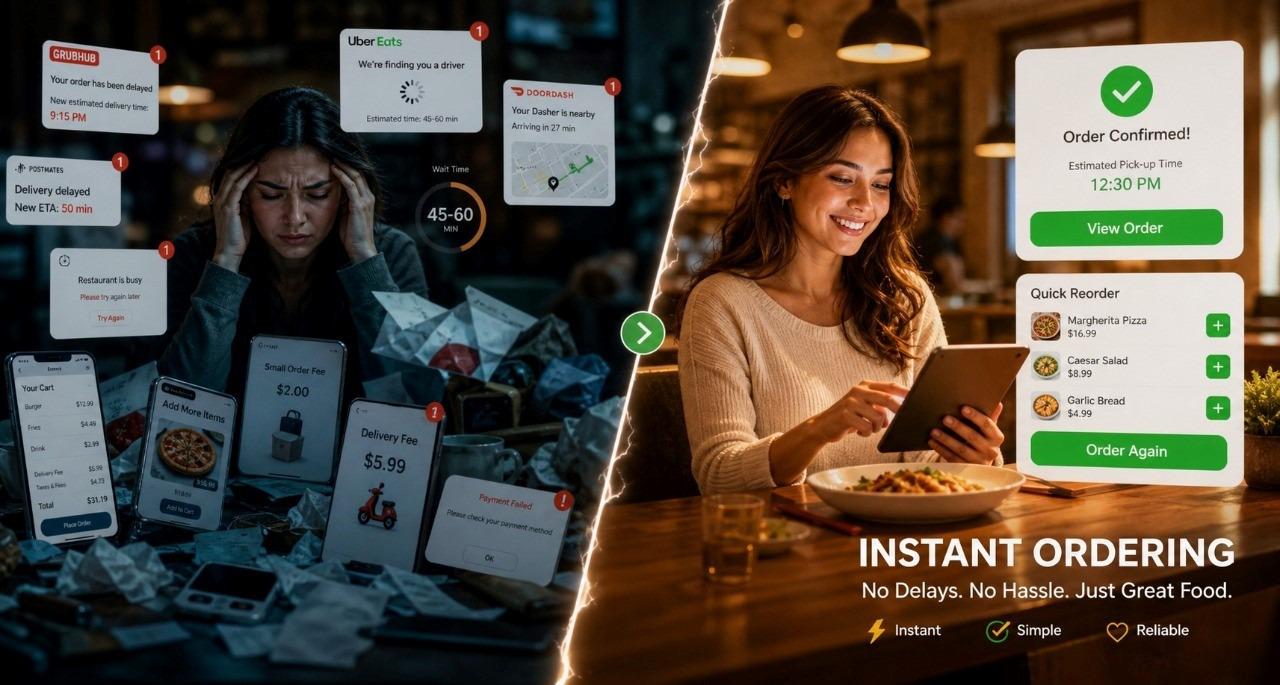
In the past, launching a business in the food industry required having a physical store, which meant facing high startup costs such as rent, décor, and labor, in addition to relying solely on local customers. With the advancement of technology and the spread of e-commerce, the food industry has undergone a major transformation, as digital platforms have become an essential way to connect restaurant owners with customers. Today, you can start your own business without the need for those high costs, taking advantage of the growing demand for online shopping in the food sector.
All you need is a strong brand that highlights your identity in the market, a user-friendly website that provides a smooth shopping experience for customers, and delicious, innovative food that captures their attention. You can also use social media to promote your products, helping you reach a wider audience and significantly increase your sales. If you are ready to take on this challenge and achieve your dream, you are in the right place.
Cartley offers a comprehensive solution for restaurant owners by creating an online store for your restaurant that allows you to showcase your menu, receive online orders, and provide a convenient and seamless experience for your customers. In this article, we will provide you with a complete guide explaining how to sell food online step by step, and how Mansati can help you achieve your business goals, increase your sales, and expand your customer base.

First: Understanding Food Regulations
Before starting your food-selling business, it is essential to understand the legal regulations in your country related to taxes, food safety, business registration and licensing, as well as information about trademarks, allergens, and more. The responsibility lies with the business owner to comply with the laws and ensure product quality. If you fulfill your obligations, obtain the necessary licenses, and keep accurate records of everything, this will help you avoid potential penalties and ensure the success of your business in the food industry. The probability of encountering issues with the Ministry of Health will be low, but if it does happen, the consequences can be severe.
Second: Find Your Niche in the World of Food
To achieve success in the online food market, it is essential to identify a specific niche that meets the needs of your target audience. If you already have a business idea, it is important to test it in the market to determine its viability. For example, ask yourself: Is there demand for this product? If the market is saturated, how can your product stand out from competitors? Is there a group of customers that is not being well served?
If you are looking to discover a new idea for your project, you can benefit from food videos, cooking recipes, meal prep groups, cookbooks, and social media platforms such as TikTok and Facebook. Food “trends” are also an excellent source of inspiration that you can take advantage of.
Another effective way to discover your business idea is by identifying a gap in the market. Many successful ideas start by solving a problem or meeting the needs of a specific group of customers. Here are some food niches and business models you can consider:
Healthy Foods: Focus on products that promote health, such as organic, non-GMO, or low-calorie options. You could launch a healthy snack subscription box service or create an online store dedicated to dietary supplements.
Ketogenic Diet (Keto): With the growing popularity of the keto diet, you can offer low-carb, high-fat products targeting health-conscious consumers. It may be suitable to start an online store selling keto ingredients or diet-specific foods.
Allergen-Free Foods: Serve individuals who have allergies to certain food ingredients by offering gluten-free, nut-free, or dairy-free products. You can establish a specialized online store for allergen-free foods to provide comfort and safety for customers with dietary restrictions.
Vegan Foods: With increasing interest in plant-based diets, you can seize this opportunity to capture a significant share of the market by launching an online marketplace dedicated to vegan products. By offering a wide variety of plant-based items, you can meet the needs of customers who adopt a healthy and sustainable lifestyle.
Luxury and Rare Foods: Target food enthusiasts looking for unique and distinctive experiences by offering premium and rare ingredients that are hard to find. For example, you could create an online store specializing in gourmet chocolate, rare spices, or specialty meats. This type of market appeals to customers who seek quality and exclusivity at their table.
Local Foods: Support the local economy by offering products sourced directly from local farms and suppliers. This could be done through a subscription service delivering fresh seasonal produce boxes or curated selections of locally crafted products.
Here are some success stories that started as small food businesses and later grew into well-known brands.

Success Story of Caroline Cresswell – Carman’s Kitchen
Caroline Cresswell started the Carman's Kitchen business with a modest amount of just $1,000 and a strong passion for healthy food. In the beginning, she made muesli bars at home (a type of healthy snack mainly made from oats, nuts, seeds, dried fruits, and honey) and sold them at local markets in Melbourne. Over time, demand for her products increased significantly, as people were looking for healthy and delicious snack options.
Caroline focused on offering high-quality, nutritious, and convenient food choices for consumers. This strong emphasis on quality and customer health helped her expand her business. Soon, Carman’s Kitchen products were being sold in major supermarkets and shopping centers, eventually becoming a well-known brand in Australia and beyond.
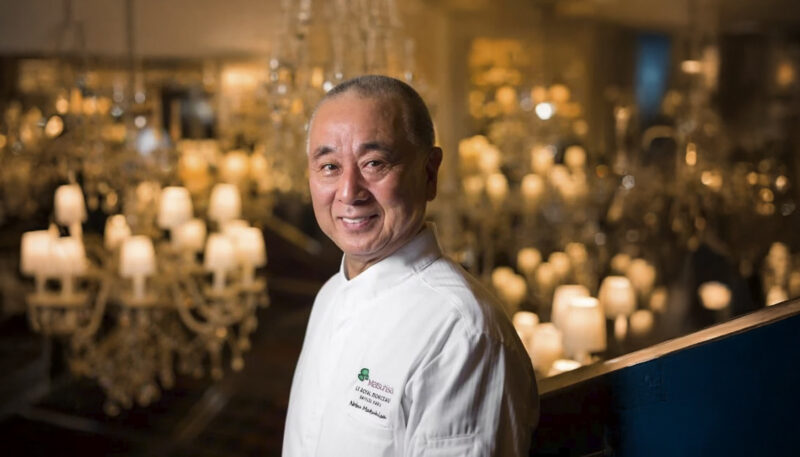
Success Story of Japanese Chef Nobu Matsuhisa
Nobu Matsuhisa’s story is considered one of the most prominent global success stories that began in a small kitchen. He is a world-renowned chef specializing in modern Japanese cuisine. He started his career in Japan, training in traditional restaurants, then traveled to Peru to work as a chef. This experience had a significant influence on his unique style of blending Japanese flavors with Peruvian ingredients.
At the beginning, Nobu faced major challenges. He opened a small restaurant in Alaska, but it burned down after a short time, causing him a significant loss. Despite this failure, he did not give up. He returned to Los Angeles and opened a small restaurant under his name, Nobu. In the early days, Nobu handled almost everything himself, from cooking to speaking with customers and managing all aspects of the business. Thanks to his distinctive dishes and the way he combined Japanese culinary traditions with global flavors, his restaurant became highly popular, attracting celebrities and business leaders. Nobu’s success is rooted in his determination to offer innovative and authentic cuisine, as well as his ability to overcome the difficulties he faced at the beginning of his journey.
These success stories show that passion and perseverance can transform even the simplest beginnings into remarkable achievements. From a small home kitchen to internationally recognized restaurants, Nobu proved that a commitment to exceptional food, high-quality ingredients, and innovation can lead to outstanding success. This journey inspires entrepreneurs in the food industry, reminding them that every dream starts with a single step, and that hard work and creativity can open doors to limitless opportunities.

Success Story of Chef Osama El-Sayed
Osama El-Sayed is considered one of the most famous and top chefs in the Arab world. He was born in Alexandria, Egypt, and is known for his warm personality and his ability to present Arabic cuisine in an innovative and professional way. After discovering his deep passion for cooking, Osama decided to pursue academic studies in the culinary field. He enrolled in a culinary institute in France, where he formally studied the art of cooking. Through this official education, he built a strong foundation of skills and knowledge that enabled him to launch his career in the culinary world.
Osama El-Sayed worked in several major hotels and restaurants inside and outside Egypt. Over time, he gained extensive experience in French and international cuisine, mastering a variety of advanced cooking techniques. He blended French culinary techniques with Arabic ingredients, presenting modern dishes that reflected the authenticity of Arab cuisine. This innovative approach made his dishes stand out and impressed many cooking enthusiasts. Chef Osama became known for adding contemporary touches to famous Arabic meals, and his name soon became prominent across the Arab world.

Third: Define Your Food Production Method
When starting your online food business, it is essential to determine the most suitable method for producing your food. Choosing the right approach depends on the nature of your products, your customers’ needs, and the resources available to you. Whether you plan to produce food in your home kitchen or collaborate with an external manufacturer, each option comes with its own advantages and challenges depending on production volume, costs, and compliance with health regulations. Below are several approaches to help you choose the right setup for your business:
Home Kitchen
You can produce food from your home kitchen, but you must comply with the laws governing home-prepared food. These regulations may allow you to prepare certain items in your personal kitchen without meeting the strict requirements imposed on large commercial kitchens. However, it is crucial to fully adhere to all hygiene, packaging, and food labeling regulations to ensure compliance with health and safety standards.
Partnering with Shared Commercial Kitchens
Collaborating with shared commercial kitchens is an ideal option for food entrepreneurs who need a licensed and health-compliant production environment. This option involves renting space in a commercial kitchen at a lower cost, allowing you to use available equipment and infrastructure to meet your production needs. You do not need to purchase equipment or bear the costs of setting up a full kitchen, as expenses are shared among multiple users.
Cloud Kitchen
A cloud kitchen is an innovative model that operates differently from traditional restaurants. These are facilities or spaces rented by food businesses or restaurants that operate exclusively through delivery services, eliminating the need for storefronts or dine-in areas. Each kitchen space within the facility contains the essential equipment needed for food preparation.
In some cloud kitchens, multiple brands share the same facility, with each brand allocated its own dedicated space within the warehouse. There are also designated areas for receiving orders from digital platforms and dedicated spaces for efficient food packaging.
Benefits of a Cloud Kitchen:
- Reduced rent, operational costs, and labor expenses.
- Enables startups and emerging brands to launch quickly using ready-to-use facilities without negotiating long-term contracts or building full restaurants.
- Fully equipped spaces that streamline food preparation, packaging, and delivery.
- Allows businesses to expand into new geographic areas without investing in new restaurant locations, using the same facilities to serve additional areas via delivery services.
Establishing Your Own Production Facility
Building and designing your own facility tailored to your needs provides full control over all aspects of the business. However, this option requires significant financial investment and careful management. You will be responsible for ensuring compliance with all local and international regulations, including obtaining proper licenses and adhering to health and safety standards. While this option may not be ideal for new entrepreneurs, it can become a future goal. Many entrepreneurs prefer starting with more flexible models, such as home production or shared kitchens, before moving to their own facility.
Working with an Existing Manufacturer
Contracting with an external manufacturer is a suitable option for entrepreneurs who prefer focusing on the business and branding side rather than production. It is a safe choice for beginners in the industry, as specialized manufacturers handle food safety and regulatory compliance. The idea, recipe, and brand remain yours, while execution is handled by professionals, allowing you to invest your time in other aspects of your business.
If you are looking for unique ingredients or products not available locally, you can import them from other countries. It is important to comply with local import and food regulations to ensure products meet required standards. If your project relies on home production, you must adhere to home food laws, which may allow certain items to be produced in your personal kitchen without meeting strict commercial kitchen standards.
However, full compliance with all legal regulations regarding hygiene standards, packaging, food labeling, and storage conditions is essential. Carefully following these regulations will help you avoid legal issues, protect your business reputation, and maintain customer trust.

Fourth: Building Your Brand
Offering distinctive food and an outstanding hospitality experience are essential, but they may not be enough to ensure sustainable success. In today’s competitive market, restaurants must adopt effective strategies that keep them top of mind when potential customers choose where to dine.
In this context, branding becomes highly important, as it is a key tool for enhancing awareness and standing out in the market. A strong brand is not just about a logo or menu design; it is also about delivering a clear message that reflects the restaurant’s identity and unique value, helping to build a loyal customer base. In the era of digital transformation, brands can now communicate faster and more widely, shifting the focus from merely inviting people to eat to educating and inspiring them about their products and services.
Here are a set of steps that can help you build your brand:
– Brand Goals: Think about your brand’s objectives, as building any brand begins with answering key questions (How do you want customers to perceive your business? Do you want to attract new customers, improve community engagement, or simply increase brand awareness? Or perhaps you want all of that?).
– Design: Selling food online presents a special challenge because customers cannot access the most important decision-making factor—the taste. Since customers cannot try your product, branding becomes especially important. Design and photography should help customers imagine what your product might taste like.
– A Brand with Clear Values: It is very important for your brand to have clear values through which you communicate with your audience. These values reflect your brand’s identity and shape how customers interact with you. Clearly defined values enhance loyalty and help build strong relationships with customers. Additionally, your brand must stand out from competitors. Differentiation is not just about offering a good product or service, but also about representing your values in a unique and innovative way. Having a strong and distinctive identity makes your brand more memorable and attractive in the market, increasing your chances of success and sustainability.
How can you highlight your brand values and build a strong relationship with customers?
– Use eco-friendly packaging materials or source ingredients locally and sustainably. This attracts customers who care about the environment and want to support companies that share their values. Customers who feel they are contributing to environmental preservation by supporting your business are more likely to return and remain loyal to your brand.
– Focus on delivering excellent customer service by listening to customers’ needs, interacting with them professionally and promptly, and providing solutions to any issues they may face. When customers feel valued and supported, they build trust in your brand, increasing the likelihood of repeat visits and recommendations to friends and family.
– If your products are characterized by high quality—whether in terms of ingredients used or preparation and packaging processes—customers will feel confident that what they purchase offers real value. Quality creates long-term loyalty, as customers return time and again for a consistently positive experience.
– When customers feel they are receiving valuable products, delivered with excellent customer service, and aligned with their personal values, their loyalty to the brand is strengthened. This loyalty not only increases repeat purchase rates but also contributes to building a positive reputation for your company through recommendations and positive word-of-mouth, attracting new customers without additional marketing costs.
– Integrate storytelling into your brand, as narratives and stories make your brand more memorable and impactful. When you connect your brand’s values and messages to a compelling story, audiences become more engaged and responsive. This helps them understand your brand, fosters familiarity and trust with your target audience, and contributes to creating a deeper and more sustainable relationship with customers.
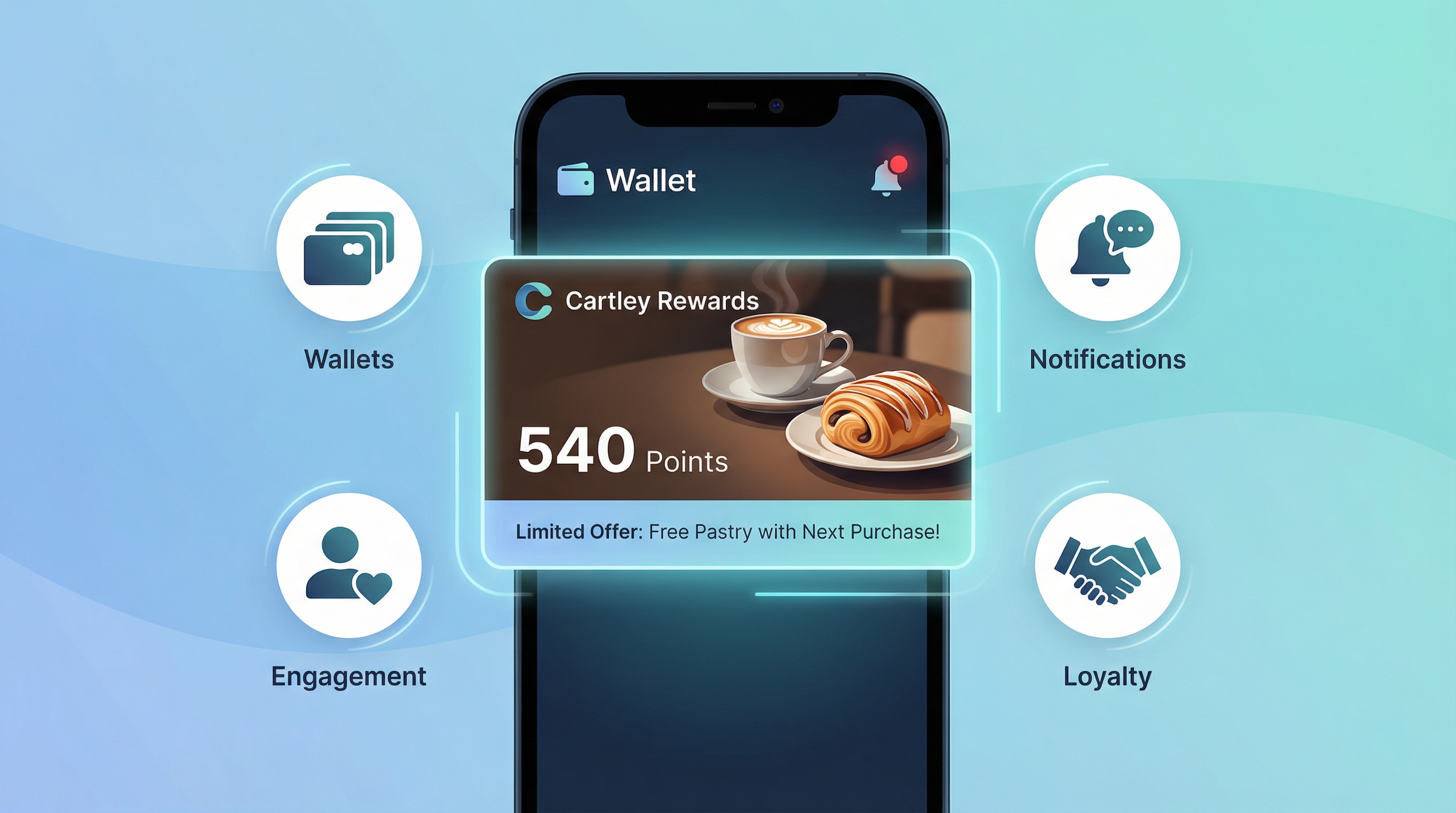
Through Cartley, we offer you an online store that enhances your sales and suits your needs, enabling you to create a strong digital presence for your restaurant. We provide the necessary tools to highlight your brand, along with technical support and advanced services that help you focus on developing your products and services, increasing your chances of attracting new customers and boosting sales.
There are many restaurants with prominent brands available exclusively on Souq Mansati, such as (kakawkw), known for offering a variety of handmade chocolates made with high-quality ingredients, with a focus on innovation and unique flavors. By providing creative options, it has succeeded in creating a distinctive experience that attracts customers. (kakawkw) has managed to leave a unique mark in the market and increase customer loyalty.
(You can explore more restaurants with prominent brands through Souq Mansati.)

Fifth: Costs and Expenses
At the beginning of any business project, focusing on attracting the largest possible number of customers is more important than achieving immediate profit. Giving up profit in the early stages can be a successful strategy for building a strong customer base and promoting the brand. In the restaurant sector, profits depend on several key factors. The quality of food and services plays a crucial role in attracting customers, and the restaurant’s geographic location directly affects the number of potential customers. For example, choosing a location in a vibrant area or near tourist or commercial attractions enhances the chances of success and increases sales.
The way food and services are presented also plays a major role in shaping the customer experience. By offering an exceptional and distinctive experience and using digital marketing tools such as online ordering, you can improve communication with customers and meet their needs more effectively. Here, the importance of using an online platform to manage your restaurant becomes clear. Through it, you can organize orders, track performance, and interact effectively with customers. This contributes to strengthening your restaurant’s success and increasing growth opportunities, which in turn raises customer satisfaction and enhances their loyalty to your restaurant.
How does Mansati contribute to reducing your restaurant’s costs and expenses?
Cartley helps reduce costs and expenses for restaurants by providing integrated technological solutions that allow restaurant owners to manage their operations more efficiently at lower costs. Instead of investing in multiple systems to manage orders, Mansati offers a single integrated platform that covers all these needs, reducing the costs of purchasing and developing different software. Restaurant owners can electronically track and manage orders and customer reservations, minimizing the need to hire additional staff to perform these tasks.
Cartley also provides marketing tools that enable restaurants to run online marketing campaigns at lower costs while reaching a larger number of potential customers. This eliminates the need to hire expensive external marketing agencies. In addition, multiple electronic payment solutions help reduce costs associated with managing traditional cash transactions, such as payment processing fees or hardware expenses.
We also help you better understand customers and marketing campaigns, allowing you to reduce costs by eliminating ineffective campaigns and focusing on the most successful ones. By transitioning to a fully digital system, operational errors—such as mistakes in orders or billing—are reduced, which minimizes waste and improves operational efficiency.

Sixth: Creating a website
To launch your food business online, you will need an attractively designed website that not only showcases your brand and products but also serves as the main point of interaction with customers and provides a positive user experience.
Choosing the right platform to run your e-commerce website is crucial, as it forms the backbone of your digital operations. Many e-commerce platforms allow you to build a store from scratch without requiring any prior technical expertise.
Your website should be a visual embodiment of your brand. This includes consistently using your brand colors, logo, and typography across all pages. The design should align with your target audience and present your products in the best possible way. The look, style, and content of your website are just as important as your brand itself. If your website offers engaging and informative content that accurately describes products, along with high-quality images, it helps build trust and enhances the visitor experience—ultimately increasing the likelihood of converting visitors into actual customers.
Cartley provides restaurant owners with distinctive websites featuring unique capabilities that enhance the customer experience. We strive to accurately convey the taste and texture of your products so that customers feel as if they are actually tasting the food. Food photography presents a particular challenge when it comes to capturing natural colors accurately. With Cartley, our specialized team edits and designs images according to the highest quality standards, ensuring an attractive presentation of food from multiple angles with precise details that perfectly reflect texture and color. This contributes to a smooth shopping experience that encourages easy and comfortable purchasing.
With Souq Cartley, you can expand beyond local markets and reach customers regionally and internationally, broadening your customer base and accessing a wider audience. Enjoy a distinctive and unique selling experience through Souq Mansati, which offers many advantages to enhance your business success, including:
- Souq Cartley brings together multiple stores in one place, where shops are categorized according to the types of products they offer, allowing customers to easily search within specific categories.
- It provides a convenient and seamless shopping experience that enables customers to quickly and efficiently find the products they need, with no commission on payments.
- Souq Cartley supports diverse and secure payment methods to ensure the safety of your financial transactions.
- It offers fast delivery services and 24/7 customer support.
- Customers can easily track their order status and purchase history, enhancing their satisfaction and loyalty to your store.
- It offers a mobile application that allows store owners to manage and track all operations and orders—you can take your favorite store with you wherever you go.
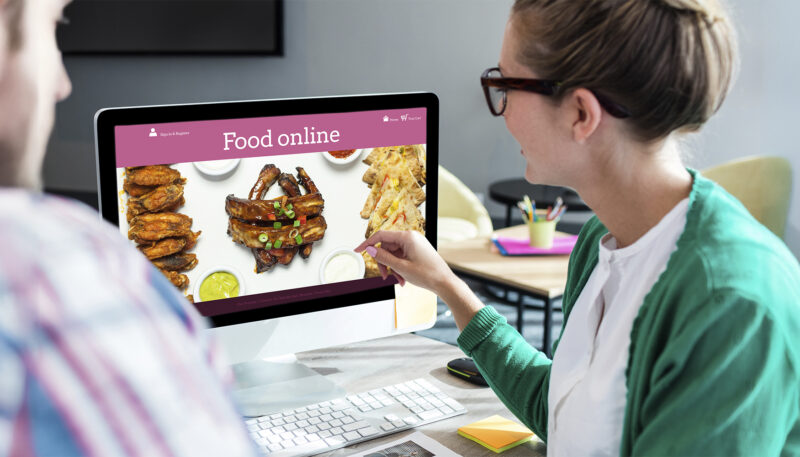
Seventh: Marketing Your Food Business
Marketing is one of the essential factors contributing to the success of any business, especially in the food sector. It is not limited to promoting products or services; it also includes building strong relationships with customers and increasing brand awareness. Through effective marketing strategies, you can reach a wider audience, increase sales, and sustainably grow your business.
Recent statistics show that 63% of companies have already increased their digital marketing budgets in recent years. Moreover, 94% of small businesses plan to increase their marketing spending in 2024.
The period between 2023 and 2024 witnessed a growth of 10%, and the annual growth rate of digital marketing between 2020 and 2026 is expected to reach 9%. In addition, digital advertising is projected to grow by 15.5%. These figures highlight the importance of marketing in achieving success and sustainable growth for your food business.
Effective Online Marketing Strategies for Your Restaurant Products
– Social Media
Social media has proven highly effective in strengthening brands, especially in the food industry due to its visual nature. Platforms such as Instagram, Facebook, and TikTok are ideal for showcasing your dishes through high-quality images and engaging stories that capture attention. By using tools such as polls and live streaming, you can interact directly with your audience and build lasting relationships.
According to recent statistics, more than 91% of businesses use social media for marketing, 90% of users follow at least one brand on social media, and 76% of social media users have purchased something they saw on these platforms. This demonstrates a shift in consumer behavior toward more direct and interactive relationships with brands and highlights the importance of having a strong presence on social media.
Sharing your story through social media platforms is also an effective way to market your products. It captures audience attention and strengthens the emotional connection with your brand. Stories help present your product’s values and features in an engaging way, increasing interaction and sharing. Customer success stories also encourage followers to make purchasing decisions and contribute to building a community around your brand. Therefore, storytelling is a powerful tool for increasing sales and enhancing brand success.
– Email Marketing
One of the oldest and most well-known forms of digital marketing, email marketing campaigns allow businesses to stay in constant contact with current and potential customers by sending newsletters about the company or special offers based on previous shopping history or brand interactions. For example, if a customer interacts with a 10% discount offer on products they were considering purchasing, this simple incentive may encourage them to complete the purchase.
The number of emails sent daily is expected to increase by 2 billion in the coming years. This means email will become even more widespread among users and marketers. About 87% of companies use email marketing to distribute their content, making it the second most common marketing channel after social media, which stands at 89%.
Nearly 60% of consumers acknowledge that email influences their purchasing decisions. Additionally, transactional emails—such as those helping customers complete purchases or reset login details—are among the most frequently opened messages by subscribers.
– Influencer Marketing
Strong partnerships with local social media influencers are considered an important strategic tool for increasing brand awareness, enhancing engagement, and building credibility. According to a study conducted by Thomson, businesses earn $6.50 for every dollar spent on influencer marketing, demonstrating its potential return on investment.
Collaborating with influencers in your field enhances brand awareness and helps increase sales. Influencers are often viewed as more trustworthy by customers, giving you the opportunity to leverage that trust to support your marketing strategy.
– Video Marketing
Video marketing is one of the effective strategies playing an increasingly important role in today’s business world. Studies indicate that 49% of companies achieve faster revenue growth when using video content, thanks to the impact of the internet and social media.
High-quality and engaging videos have the ability to be persuasive and impactful, regardless of the size of the company producing them. Videos that promote your brand help increase sales, raise awareness of your products, and enhance engagement with current and potential customers, strengthening your overall marketing strategy.
– Content Marketing
Content marketing is an approach aimed at connecting with the target audience by creating original content rather than focusing on direct sales. This type of marketing seeks to enhance brand awareness through materials that attract a specific audience.
Forms of content marketing include educational articles and blogs, videos, and podcasts.
Creating high-quality content is essential to attracting an audience. However, it is equally important to publish content at times when customers are most active. Use social media analytics to determine peak engagement times and identify the optimal moments to maximize reach and interaction.
– Search Engine Marketing (SEO)
Search engine marketing is one of the most effective ways to promote your products and grow your business. It plays a vital role in enhancing your website’s visibility in search engine results, increasing traffic, and improving potential sales opportunities.
What distinguishes this strategy is its ability to display advertisements to customers who are ready to buy at the exact moment they are searching for products or services—something other advertising methods cannot offer.
This is why search engine marketing is extremely powerful for business growth. More than 8.5 billion searches are conducted daily on Google, which controls 91% of the global search engine market. Search marketing is expected to grow by 12.2%, representing 40.9% of the global digital advertising and marketing market. This makes SEO capable of delivering tangible results for companies and brands of all sizes.
Ultimately, investing in a cohesive marketing strategy is vital for your brand’s success in a competitive market. Over time, your identity will evolve and stand out amid the noise, enabling you to reach your target audience more effectively. Through effective communication and engaging content that aligns with your customers’ values and interests, you will be able to build strong and lasting relationships with them. This will enhance customer loyalty, increase engagement, and positively reflect on your brand’s growth and sales.
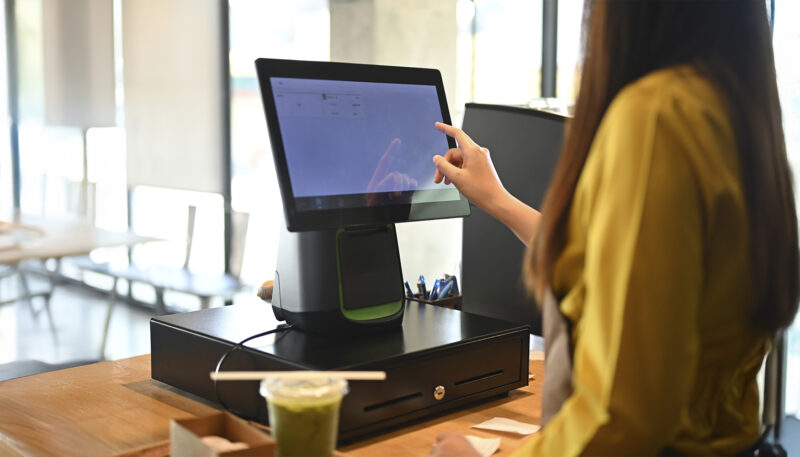
Eighth: Cloud-Based Point of Sale (POS) System
A cloud-based POS system is a technological solution used to manage restaurant operations through the internet and cloud storage, instead of traditional systems that rely on on-site servers within the restaurant. Cloud-based systems can be accessed from any device connected to the internet. This flexibility allows restaurant owners to manage their businesses remotely, from anywhere in the world.
Among the key advantages of cloud-based POS systems used in restaurants:
- Restaurant owners can monitor sales, inventory levels, and customer interactions in real time, enabling informed decision-making without having to wait for end-of-day reports.
- The ability to access cloud systems from multiple devices such as smartphones, tablets, and laptops allows restaurant managers to oversee operations from anywhere, whether on-site or off-site.
- Cloud-based POS systems are inherently scalable. They can easily accommodate additional locations or increased transaction volumes without requiring major hardware upgrades.
- Cloud-based POS systems offer strong security measures such as encryption and regular backups to protect sensitive customer information.
- A cloud-based POS system can significantly reduce IT costs associated with maintaining physical servers and hiring specialized IT staff.
If you are ready to improve the POS experience in your restaurant, Cartley offers one of the leading cloud-based POS solutions in the restaurant sector, specifically designed to meet the needs of this industry. With its user-friendly interface, advanced data analytics, and seamless integration options, Cartley is the ideal choice for restaurants of all sizes, whether small or large.
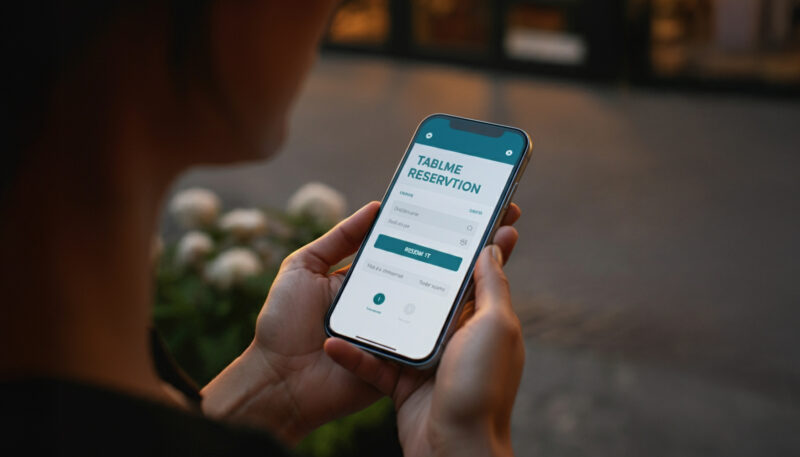
Ninth: Online Table Reservation System for Restaurants
An online table reservation system is an application that helps customers book a table in advance at a restaurant, saving them time and helping them avoid long waiting lines. Instead of relying on staff to organize reservations, customers can easily book their tables directly through the application, giving them greater convenience in selecting a time that suits them. This automation of the reservation process saves time, reduces booking-related errors, and contributes to enhancing customer satisfaction and improving service quality.
The best way to integrate this service into the dining experience is by connecting the online reservation system with the restaurant’s Point of Sale (POS) system. Through this integration, restaurants can improve reservation management while accurately and efficiently tracking orders and sales, helping to speed up operations and simplify overall restaurant management.
With Cartley, you can now ensure your customers’ comfort and achieve better sales management by utilizing the Cartley application and a customized table reservation system for your restaurant. This system allows you to manage reservations more efficiently and gives your customers the flexibility to book tables in advance, reducing waiting times and enhancing the overall customer experience. Cartley is not just a reservation management tool—it is a strategic partner in improving all aspects of your restaurant’s operations and delivering an exceptional experience to your customers.
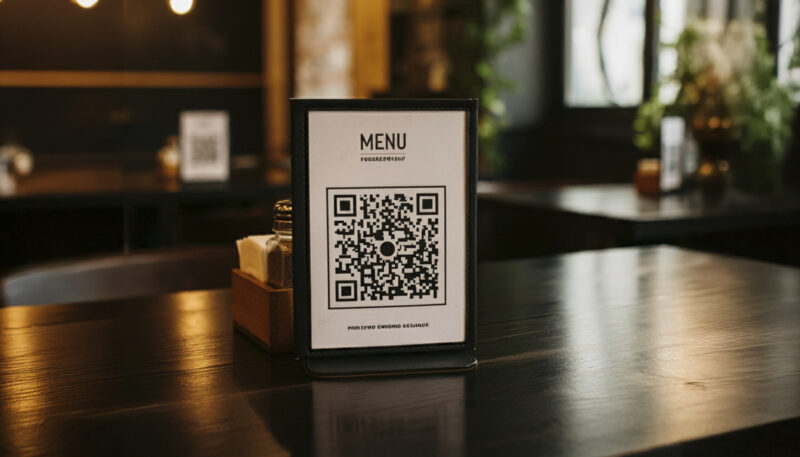
Tenth: Digital Menus (QR Code Menu)
The use of QR code menus in the restaurant sector has become increasingly common. Customers can easily access the digital menu on their devices by scanning a QR code using their smartphone camera or any other device. This method allows them to browse the menu, place orders, and even pay their bills, contributing to faster service and providing a convenient and seamless experience. It eliminates the need for paper menus, enhances the customer experience, and reduces direct contact between customers and staff.
The digital transformation of menus through QR codes represents an important step in the development of the restaurant industry, and these menus are expected to become an essential part of the customer experience.
(Cartley: The Ideal Solution for Marketing Your Products Online)
Marketing through social media is essential for any business seeking to stand out, as your competitors are already using these platforms to reach new customers. Now is the time to strengthen your efforts in this area. Mansati simplifies the marketing process for your restaurant through Souq Mansati, which enhances your brand through digital marketing. Below are some of the key advantages Souq Mansati offers for marketing your restaurant:
Search Engine Optimization (SEO):
Souq Mansati provides tools to develop your online store with built-in SEO features. This helps your store rank higher in search results and attract more visitors, increasing the visibility of your products and services to a wider audience and contributing to higher sales and business growth.
Marketing Automation:
Through Souq Mansati, we automatically implement marketing services for your store. The primary goal is to simplify and accelerate your marketing operations by effectively targeting customers with automated marketing messages, including email, websites, social media, text messages, and digital advertisements to generate leads.
For example, if a customer purchases a product through your online store, a purchase receipt is automatically sent, followed by a thank-you message and order tracking number. Later, the customer may be asked to leave a product review. If a customer does not complete their purchase and leaves items in the shopping cart, Souq Mansati automatically sends a reminder message encouraging them to complete the purchase or offering a discount. Overall, marketing automation helps improve campaign effectiveness and increase return on investment.
Marketing Analytics:
Souq Mansati provides comprehensive and detailed insights into the performance of your marketing campaigns, enabling you to evaluate results and make necessary adjustments to improve performance. Using advanced tools to measure marketing effectiveness, and through analyzing customer data via Souq Mansati, store owners receive detailed insights into customer preferences, favored products and services, shopping behavior, and interactions with the brand. By analyzing marketing data, businesses can make informed decisions regarding strategy, activities, and budget allocation—maximizing resource utilization and achieving goals efficiently.
Technical Support:
Souq Mansati has a dedicated technical support team committed to ensuring you maximize the available tools and implement marketing strategies effectively. By providing fast and efficient technical support, customers can resolve issues easily, enhancing their satisfaction. This increases the likelihood that they will share their positive experiences with others, significantly contributing to attracting new customers to your store. Success is not limited to offering products—it also includes how you interact with customers and continuously meet their needs.
Increasing Return on Investment (ROI):
By improving marketing campaign performance, Souq Mansati enables your store to maximize the benefits of its investments—whether through social media advertising, email marketing, promotional offers, or any other method aimed at attracting customer attention and encouraging purchases or brand engagement. The objective of these campaigns is to achieve specific marketing goals such as increasing sales, raising brand awareness, and targeting customers more effectively.
Conclusion
With the rapid changes in the world of digital marketing, joining Souq Mansati is a strategic step that ensures your competitive edge in the food market. Take advantage of the opportunities available to you and become part of a growing community of entrepreneurs who have achieved remarkable success. Invest in your restaurant’s future today and begin your journey toward growth and prosperity.
With Souq Mansati, we do not charge any commission on your sales, allowing you to retain 100% of your earned profits. If you are already subscribed to Cartley’s e-commerce services, you are ready to get started, as you receive a free subscription to Souq Cartley as a certified seller.