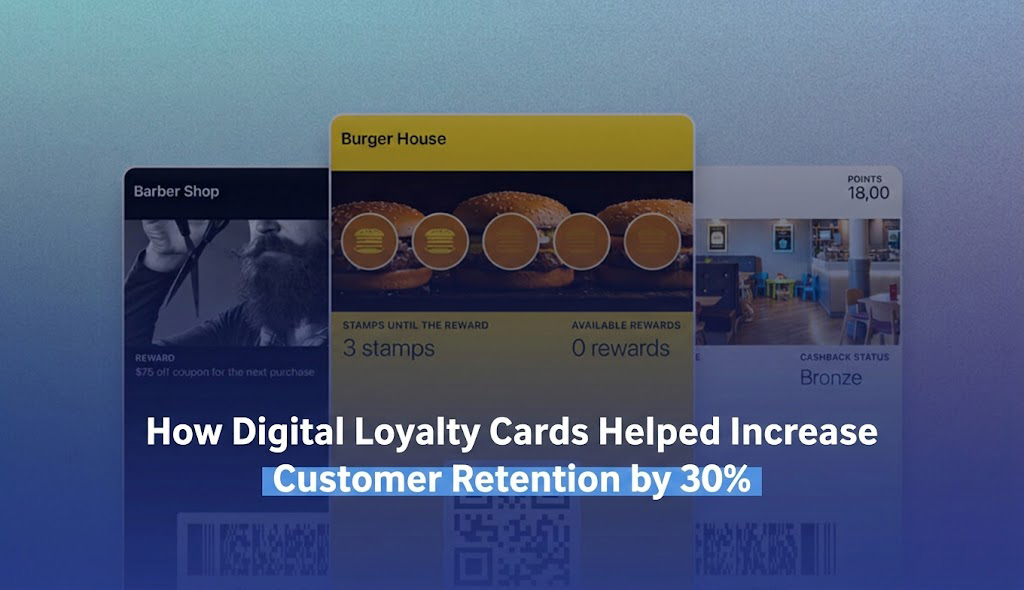
Introduction
Paper loyalty cards are no longer just an outdated tool—they have become a burden for both customers and business owners.
How many times has a customer felt frustrated because they forgot their paper card and missed out on a reward they deserved? A free coffee, a discount, or a gift—lost simply because the card was left on the kitchen table.
But the real problem does not only affect the customer; it also exists behind the counter. For business owners, traditional loyalty cards are like a closed box:
You distribute the cards, punch them, and grant rewards… without receiving any real data in return. You know a purchase happened, but you don’t know:
· Who the customer is
· What they bought
· How many times they returned
· Whether they are a loyal customer or just a one-time visitor
Here lies the fundamental flaw in traditional loyalty programs:
They rely on guesswork instead of data. When loyalty programs are managed in the dark without insights, running them becomes like walking blindfolded. You cannot answer critical questions that could truly impact your business growth, such as:
· Who are my top 10% of customers?
· Which regular customers have recently stopped visiting?
· What is the average time between visits for my most loyal customers?
The absence of this visibility prevents you from building real relationships with your customers and makes your rewards random rather than strategic. This is precisely where digital loyalty cards emerged—not as a superficial upgrade, but as a fundamental solution.
But what are digital loyalty cards?
A digital loyalty card is the smart, advanced version of the traditional loyalty card. It is stored directly in a mobile wallet such as Apple Wallet or Google Pay, without requiring customers to download an additional app. This alone makes a significant difference:
No forgetting, no losing, no delays at checkout.
However, its real power goes far beyond this simple definition—it is more than just a card; it is a direct engagement channel.
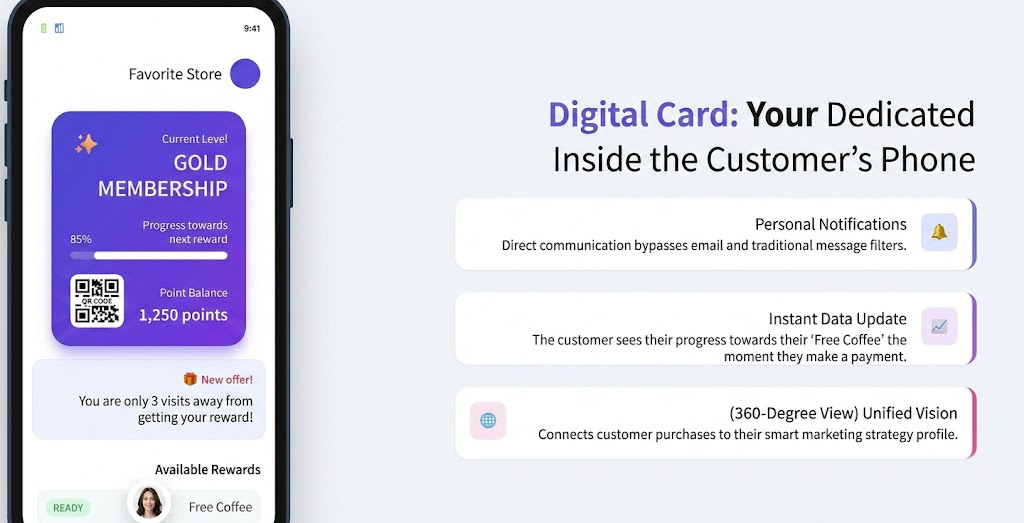
A modern digital loyalty card is not just a static image or a QR code. It is a dynamic, interactive tool that updates in real time and displays:
· Points balance
· Membership level
· Available rewards
· Progress toward the next reward
It can be considered a dedicated space for your brand inside the customer’s smartphone—the most frequently used device in their daily life. Through it, your brand can:
· Send personalized push notifications
· Remind customers of their rewards
· Connect their in-store and online experiences
· Build a unified view of their relationship with your business
From Anonymous Visitor to Loyal Customer
Once a customer joins your digital loyalty program by scanning a QR code, the picture becomes clear:
· Their name
· Visit history
· Favorite products
· Purchase frequency
What was impossible with paper cards is now available at the click of a button.
Why Now? The Numbers Tell the Story
Digital wallets are no longer a future trend—they are a daily reality, supported by clear data:
- 65% of adults use digital wallets at least once a month to manage payments and cards.
Among younger generations, the shift is even more pronounced. More than 90% of consumers aged 18 to 26 rely on digital wallets as their primary method for payments and storing cards.
In terms of engagement, 71% of users aged 18 to 34 are willing to receive offers and notifications through push alerts within digital wallets.
Additionally, 64% of young consumers prefer storing loyalty cards on their smartphones rather than carrying traditional paper cards.
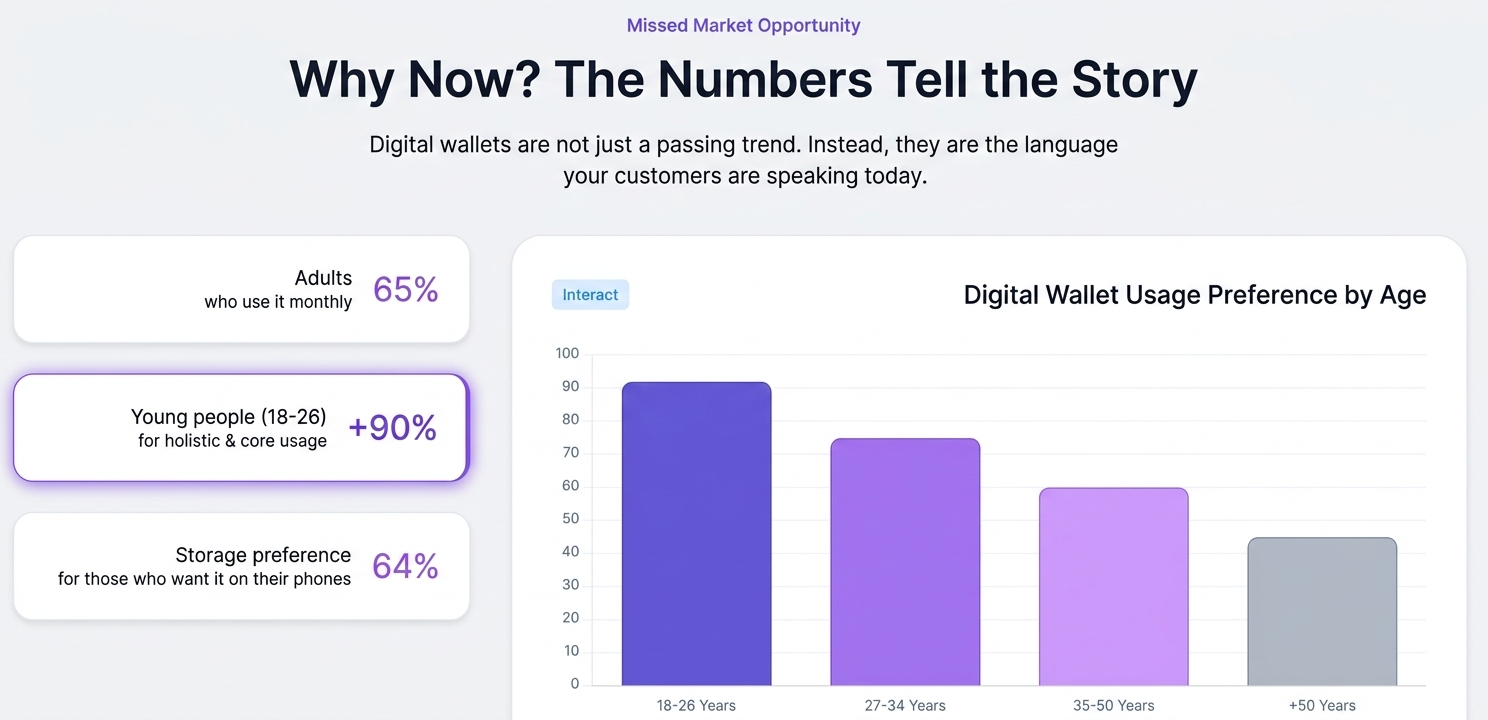
These numbers reflect one clear reality:
Your customers are already using these channels. They are comfortable with them—and even expect them from modern brands.
When you offer a digital loyalty card, you are not asking customers to adopt a new behavior. Instead, you are seamlessly integrating your brand into their daily habits—a smart step toward building a closer relationship, stronger engagement, and greater loyalty.
Benefits of Digital Loyalty Cards
Digital loyalty cards have become an essential tool for any business seeking to build long-term relationships with its customers. They offer practical advantages that go far beyond traditional loyalty programs. The most important benefits include:
1. Seamless Customer Experience and Greater Convenience
No need for paper cards or additional apps. Customers can earn and redeem points quickly and easily.
2. Accurate Data Instead of Guesswork
Track visits, purchase history, favorite products, and engagement patterns—supporting marketing decisions based on real data.
3. Smart Personalization of Rewards
Customized offers and rewards tailored to each customer’s behavior enhance their sense of appreciation and strengthen their connection to the brand.
4. A Direct and Effective Marketing Channel
Instant push notifications reach customers directly on their phones—often more impactful than email or social media—alerting them about offers and rewards.
5. Reduced Operational Costs and Increased Efficiency
Eliminating printing and plastic reduces costs and makes marketing campaigns more precise and efficient.
6. Scalability and Easy Integration
Easily integrates with POS systems and marketing tools, allowing the program to evolve as the business grows.
7. Stronger Brand Image and Competitive Advantage
Reflects the brand’s commitment to innovation and customer experience, attracting digitally savvy customers and giving you a competitive edge.
The Difference Between Traditional and Digital Loyalty Cards
Although both traditional and digital loyalty cards share the same goal—encouraging repeat purchases—the difference between them is significant in terms of cost, customer experience, and the ability to collect and analyze data. This difference directly impacts customer retention.
|
Feature |
Digital Loyalty Card |
Paper Loyalty Card |
|
Initial Cost |
Moderate |
Low |
|
Ongoing Operational Costs |
Low |
Moderate (printing and replacement) |
|
Customer Data Collection |
Comprehensive and accurate |
Limited or unavailable |
|
Fraud Prevention |
High (digital tracking and instant verification) |
Low |
|
Customer Convenience and Ease of Use |
High (stored on the phone) |
Moderate |
Types of Rewards in Digital Loyalty Programs
Digital loyalty programs rely on flexible and diverse rewards designed to encourage continuous engagement and strengthen customer relationships with the brand. The most common types of rewards associated with digital loyalty include:
· Digital Discounts
Exclusive discounts delivered through apps or push notifications that encourage customers to make quick purchasing decisions.
· Loyalty Points (Virtual Currency)
Digital points or credits that customers collect with every purchase or interaction, which can later be redeemed for rewards or discounts.
· Visit-Based Points
Rewards granted to customers for repeated visits to the store or platform—even without completing a purchase—encouraging ongoing engagement.
· Instant Rewards
Incentives provided immediately after a purchase, reinforcing instant satisfaction and linking the positive experience to the brand.
· Personalized Discounts
Offers tailored to a customer’s purchasing behavior and preferences, increasing the likelihood of long-term retention.
· Access to Exclusive Content
Providing premium content such as articles, videos, or special features, enhancing the perceived value of the loyalty program.
· Early Access to Offers and Products
Priority access to new products or promotional campaigns, giving customers a sense of exclusivity and belonging.
Why Are These Rewards Effective?
Because they transform loyalty from being just a card or discount into a personalized, interactive experience that makes customers feel every interaction holds real value.
How Do Digital Loyalty Rewards Increase Customer Retention by 30%?
Modern marketing studies confirm that companies implementing effective digital loyalty programs achieve a 20% to 30% increase in customer retention compared to traditional programs.
This growth does not happen randomly. It is the direct result of how digital rewards influence customer behavior and purchasing decisions.
Digital loyalty rewards operate through four key mechanisms:
1. Increasing Engagement Beyond the Moment of Purchase
Points, visit rewards, and instant incentives create repeated touchpoints with customers, keeping the brand top of mind—even during periods when they are not actively buying.
2. Enhancing the Sense of Personal Value
Behavior-based offers make customers feel the reward is “meant for them,” not just a generic promotion. This significantly increases the likelihood of staying with the brand rather than switching to competitors.
3. Building Emotional Attachment and Reducing Price Sensitivity
Early access and exclusive content shift the relationship from being price-driven to belonging-driven—an essential factor in reducing customer churn.
4. Turning Rewards into a Purchasing Habit
When customers see immediate value from every interaction, their behavior shifts from occasional response to consistent purchasing patterns. This explains the sustainable increase in retention rates.
How Digital Loyalty Cards Work
1. Adding the Card to a Digital Wallet
· Users download or add the card directly to Apple Wallet or Google Pay via email or QR code.
· This enables quick and seamless access without carrying a physical card.
2. Automatic Point Collection
· Upon purchase, points are recorded automatically using technologies such as NFC, Bluetooth signals, or geo-check-ins.
· This allows real-time tracking of every transaction without customer intervention.
3. Program Management Through a Digital Platform
· The card can operate on standalone platforms or integrate with the company’s existing POS systems.
· Hybrid setups may support QR-based rewards for greater design flexibility.
4. Notifications and Incentives
· Customers receive instant alerts when their points are about to expire or when new rewards become available.
· Badges and instant coupons can also be displayed digitally.
5. Omnichannel Usage
· The digital card connects online and in-store shopping experiences.
· Customers receive consistent rewards and ongoing purchase tracking, strengthening brand loyalty.
6. Dynamic QR Code Scanning
· When a QR code is scanned, a web page displays the customer’s current loyalty status.
· Data updates in real time from the cloud, ensuring information is always current.
7. Secure Cloud Data Storage
· All data (points, rewards, purchase history) is securely stored and accessible from any device.
· Businesses can analyze performance and optimize loyalty strategies quickly.
8. Direct Smartphone Camera Use
· Modern smartphones have built-in QR scanners—no additional app required.
· This keeps the process extremely simple for both customers and businesses.
How to Choose the Right Digital Loyalty Solution for Your Brand
Selecting a digital loyalty solution should not depend solely on the number of features. Instead, it should focus on the platform’s ability to:
· Adapt to your business model and future growth
· Integrate seamlessly with POS and e-commerce systems
· Provide a simple, frictionless customer experience without requiring extra apps
· Deliver accurate data to support smart marketing decisions
Cartley Wallet: A Model for Advanced Digital Loyalty Solutions
When it comes to building advanced digital loyalty programs designed to increase revenue and enhance customer retention, Cartley Wallet stands out as a solution that combines technological strength with ease of use.
With years of experience in digital solutions and the successful launch of numerous loyalty programs, Cartley Wallet is designed to be more than just a loyalty system. It is a comprehensive ecosystem that helps brands transform daily customer interactions into sustainable, scalable relationships.
In the next section, we explore how Cartley Wallet works in practice and why it represents a powerful example of effectively implementing scalable digital loyalty programs:
1. Choosing the Right Template for Your Brand
The journey begins by selecting a customized loyalty card template that reflects your brand identity, with the flexibility to modify it later without rebuilding the program from scratch.
2. Choosing the Type of Loyalty Card
Whether it is a points-based card, stamp card, visit-based program, or instant reward model, Cartley Wallet allows you to select the structure that best fits your business model and your customers’ behavior.
3. Choosing the Activation Method (QR Code or Barcode)
The preferred interaction method is selected—either QR code or barcode—with optional geolocation support when needed. This enables smart loyalty scenarios to be activated both inside and outside the store.
4. Precisely Customizing the Reward System
You can define the exact number of stamps or points required for each reward, ensuring alignment with your profit margins and overall customer retention strategy.
5. Instant Launch Without Technical Complexity
Once configured, the program is ready for immediate use—without the need for additional apps or complex technical infrastructure.
6. Customer Interaction via QR Code Scanning
The customer scans the QR code during their visit or at checkout, and the interaction is instantly recorded, with points automatically added in real time.
7. Adding the Card to the Digital Wallet
In the final step, the loyalty card is added directly to Apple Wallet or Google Wallet, ensuring your brand remains easily accessible and always within the customer’s reach.
The Future of Digital Loyalty Cards
Loyalty programs are no longer measured by the number of points they offer, but by their ability to change purchasing behavior and build long-term loyalty. Global trends indicate that more than 80% of loyalty programs will become fully digital by 2030.
By 2026, digital loyalty cards will become an invisible part of the customer experience—embedded within digital wallets and payment systems—where rewards are calculated automatically and in real time, without complex registrations or forced interactions.
With the rapid integration of artificial intelligence, loyalty programs will shift from rewarding past behavior to predicting future behavior. Smart offers will be activated at the right moment, reducing customer churn and increasing engagement by up to 40%.
Conclusion
Brands that invest today in flexible and scalable solutions will lead the market tomorrow. Platforms like Cartley Wallet do not chase the future—they create it.
And the journey always begins with a smart conversation about building stronger loyalty and delivering a smarter customer experience.